
Copyright: Eifel Tourismus GmbH, Dominik Ketz
Where knights once fought
The Eifel region in the heart of Europe has always been home to powerful noble families. Knights fought their battles here. Today, the many castles and palaces—or what remains of them—fascinate visitors as a fairytale backdrop.
The Gerolstein region is rich in impressive castles. Take a tour of these historic buildings, such as Bertrada Castle in Mürlenbach or Kerpen Castle, and immerse yourself in history.
Be impressed
9 results
Adler- und Wolfspark Kasselburg
PelmOpen today
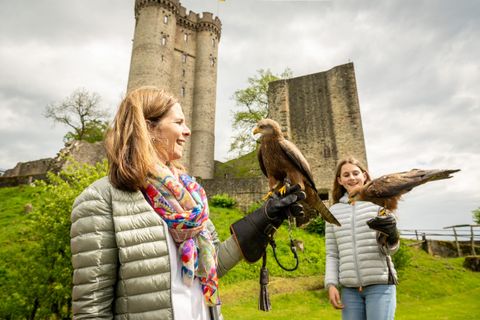
The 20-hectare park around the historic castle complex from the 12th century with dense forests, lush meadows and diverse enclosures for birds of prey, wolves and other animals.
Burgruine Löwenburg
GerolsteinOpen today
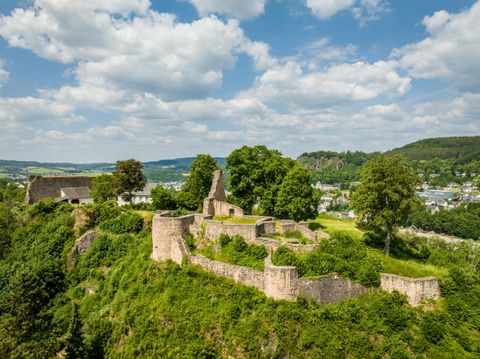
The ruins of the medieval Löwenburg Castle are towering high above the City of Gerolstein. The Castle is open all year round and offers a wonderful view over Gerolstein, the dolomites massif and the kyll valley. Every two years the castle-actors stage an open-air theatre within the historical walls.
Burgruine Freudenkoppe
NerothOpen today
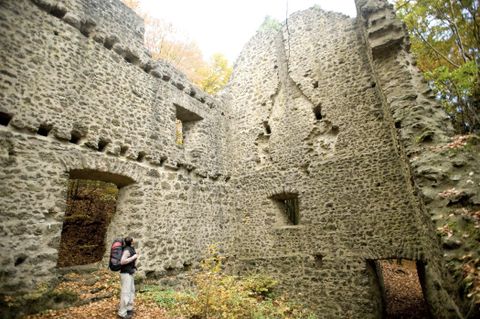
The ruins of the castle Freudenkoppe on the Nerother Kopf is throughout the year open. You can't reach the ruins directly with the car!
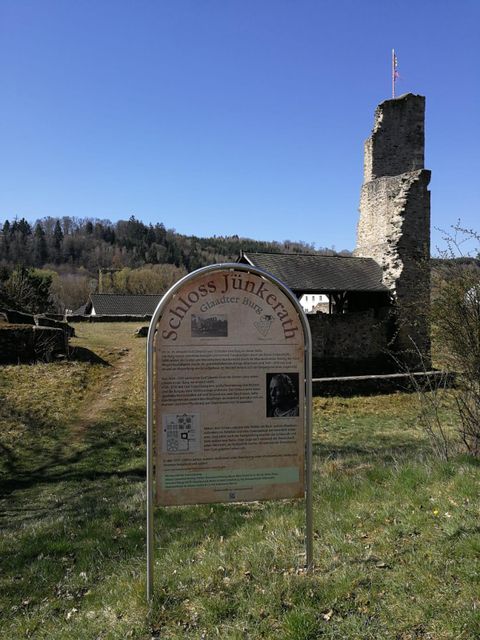
Burgruine - Glaadt
JünkerathOpen today
In the Middle Ages, Glaadt was even more important than Jünkerath, which at that time was only a hut settlement. For this reason, the counts of Blankenheim built a castle there in the 13th century, which was rebuilt into a magnificent hunting lodge at the beginning of the 17th century. However, a lightning strike in the 18th century caused it to burn to the ground.
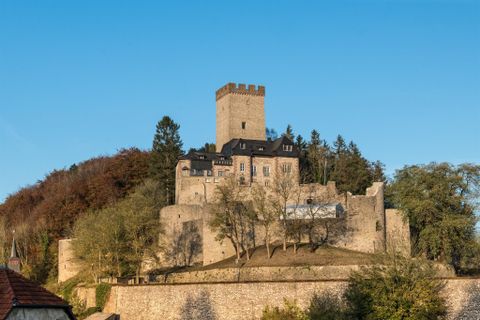
Burg Kerpen
KerpenAlfred Andersch lebte nach dem 2. Weltkrieg mehrere Jahre auf Burg Kerpen. Castle Kerpen was from 1911 to 1941 the home of the famous Eifel painter Fritz von Wille, whose grave is located above the castle. Alfred Andersch lived for several years afther the Second Worl War at the Kerpen Castle. The castle is currently privately owned and can only be visited from the outside.
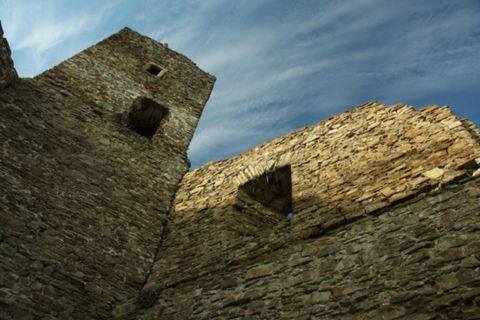
Burgruine Neublankenheim
ÜxheimOpen today
The castle ruins is located in the Ahbachtal and discovered for the first time in 1272.
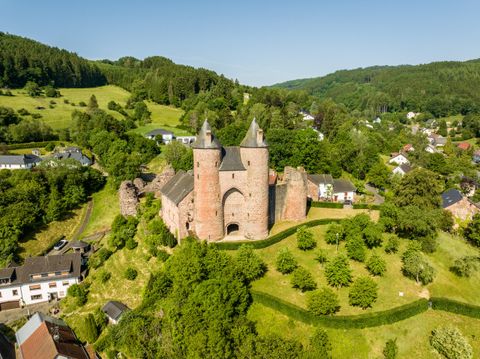
Bertradaburg
MürlenbachHigh above the Eifel village of Mürlenbach the imposing scenery of the Bertradaburg Castle emerges.
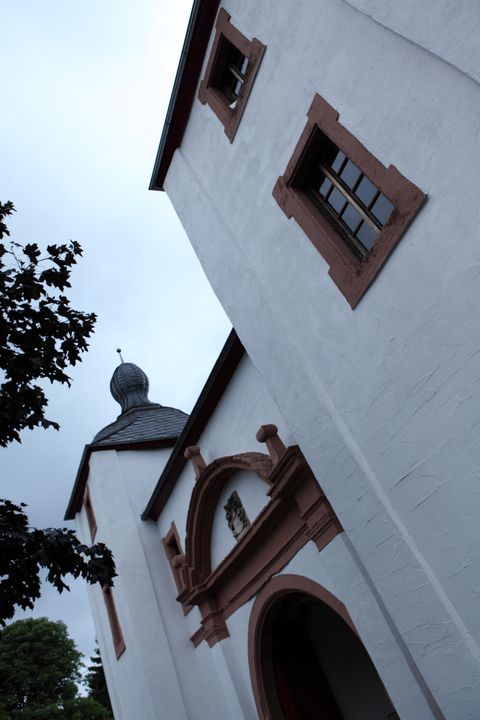
Schloss Oberehe
ObereheThe castle complex was built in 1696-98 as a fortified noble estate. Even though the building cannot be entered (private property), it is worth a look through the archway.
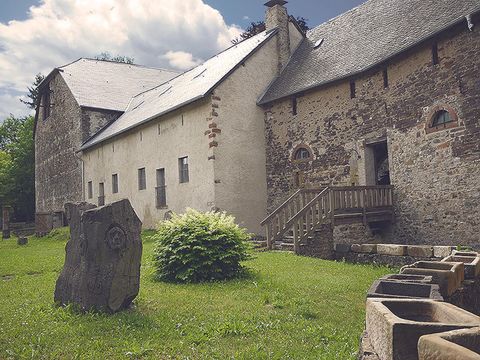
Unterburg Lissingen
GerolsteinThe historic roots of this former water castle near the Kyll River date back far into the past.